
RENEWABLE ENERGY / KNOWLEDGE HUB
Climate, Energy & Sustainability Explained
Why is Earth warming? How much energy does the world use, where does that energy come from, and what does a sustainable future actually look like? Climate, Energy & Sustainability Explained offers clear, science-based answers to these questions, starting with familiar examples and building toward a more complete understanding of climate and the energy transition.
This hub is for the general public, school students, beginners, teachers and curious readers. You do not need an engineering background to begin. The lessons define important terms, explain the evidence, show everyday applications and link to more technical resources when you are ready to explore further.
Start with the big picture
Energy makes modern life possible. We use it to generate electricity, move people and goods, heat and cool buildings, produce food, and manufacture materials. Different energy sources have different environmental impacts. Burning fossil fuels releases carbon dioxide, while activities such as agriculture, land-use change and industrial processes contribute other greenhouse gases. These gases influence Earth’s energy balance and contribute to global warming.
Understanding the challenge starts with distinguishing weather (short-term atmospheric conditions) from climate (patterns over longer periods), and understanding how scientists measure changes over time. It also requires separating observed historical facts from future projections based on specific assumptions.
Six areas to explore
- Climate change basics: understand the greenhouse effect, global warming, climate evidence, natural variability, and the consequences of a changing climate.
- Carbon emissions and net zero: learn the differences among carbon dioxide, greenhouse gas emissions, carbon neutrality, net zero, emissions reductions and carbon removals.
- Energy in everyday life: follow electricity and fuel from the source to homes, transport, businesses and industry, with examples of how demand and efficiency affect energy use.
- Sustainability explained: explore responsible resource use, life-cycle thinking, circular-economy principles, and the links among environmental, social and economic outcomes.
- Climate solutions: compare renewable energy, nuclear power, energy efficiency, electrification, storage, nature-based approaches and other responses, recognizing their benefits and limitations.
- Climate myths and evidence: practice reading charts, comparing claims with reliable sources, and distinguishing strong scientific evidence from unsupported assertions.
How much of the world’s energy is clean?
One of our featured learning topics examines how the global energy mix changed over the last century and how it might change between today and 2050. A central question is deceptively simple: what percentage of the world’s energy comes from clean sources?
The answer depends on what is being measured. Low-carbon electricity is not the same as low-carbon total energy supply or final energy consumption. Electricity is only one part of the energy system; fuels used for vehicles, industrial heat and other activities also matter. Furthermore, “renewable energy” and “low-carbon energy” are not identical categories, because low-carbon accounting commonly includes nuclear power alongside renewable sources.
Our planned historical energy article will compare published observations with clearly labelled future scenarios, explain different accounting methods and avoid presenting uncertain projections as guaranteed outcomes. Historical data, units, dates and source definitions will be provided alongside the charts.
A simple everyday example
Imagine two identical rooms on a hot afternoon. Both need comfortable indoor temperatures. One room has poor insulation and receives strong direct sunlight through unshaded windows. The other uses effective shading, appropriate insulation and efficient cooling equipment. The second room may need less electricity to provide the same comfort. This illustrates energy efficiency: delivering a useful service while reducing energy input. The actual savings depend on the climate, building design, equipment, occupancy and operating conditions.
Efficiency matters, but no single household action can solve climate change by itself. Large-scale progress also depends on electricity systems, industry, transport, infrastructure, policy and technology choices.
A suggested learning path
- Learn the greenhouse effect. Understand why naturally occurring greenhouse gases help make Earth habitable, and how additional human-caused emissions affect warming.
- Read the history of the energy mix. Compare clean energy in total energy supply with low-carbon electricity, using historical data and future scenarios.
- Understand climate change evidence. Explore measurements, trends, impacts and uncertainty.
- Learn carbon-footprint and net-zero concepts. Distinguish emissions accounting, reduction measures and residual emissions.
- Connect the science to practical solutions. Investigate efficiency, power generation, transport, resource use and sustainability trade-offs.
Explore related RENEWIOSITY topics
- Solar Energy — how sunlight becomes usable thermal and electrical energy.
- Wind Energy — how moving air drives turbine generation.
- Energy Storage & Batteries — why storing energy helps match supply and demand.
- Green Hydrogen — hydrogen production and energy-system applications.
- Industrial Energy Efficiency & Heat Recovery — more advanced efficiency and heat-recovery principles.
Sources and further reading
- Intergovernmental Panel on Climate Change (IPCC), AR6 Synthesis Report — a scientific assessment of climate change, impacts, adaptation and mitigation.
- International Energy Agency, Global Energy Review 2026 — a comprehensive review of 2025 energy trends.
- Our World in Data, Energy Mix — historical charts with methodology notes and source information.
- Our World in Data, Energy Dataset — documented energy and electricity indicators for careful comparisons.
Reading guide: We distinguish measured observations from estimates and future scenarios, identify the year covered by each dataset, and explain terms such as primary energy, total energy supply and final energy consumption when comparisons are made. Definitions, data revisions and system boundaries can materially change a reported percentage.
ARTICLES & TECHNICAL GUIDES
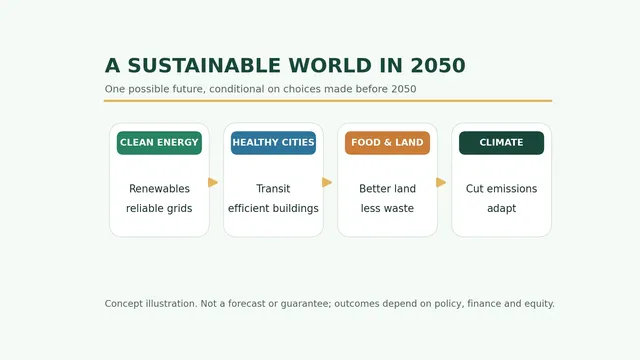
What Would a Sustainable World Look Like in 2050? Energy, Cities, Food and Climate
A science-based view of possible sustainable futures in 2050 across energy, buildings, cities, food and climate resilience, with clearly marked scenarios, figures and engineering …
Read article ↗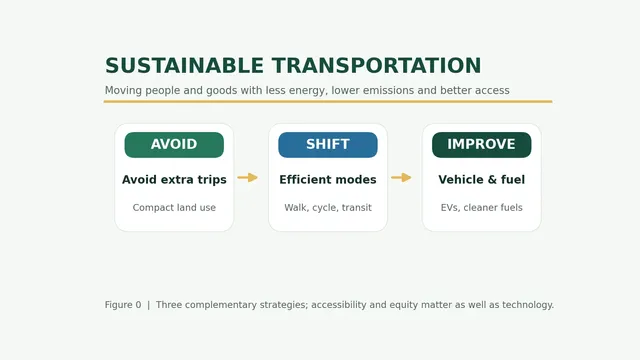
Sustainable Transportation Explained: Electric Vehicles, Public Transit and Cleaner Fuels
A science-based introduction to sustainable mobility, comparing electric cars, public transport and alternative fuels with lifecycle boundaries and worked engineering calculations.
Read article ↗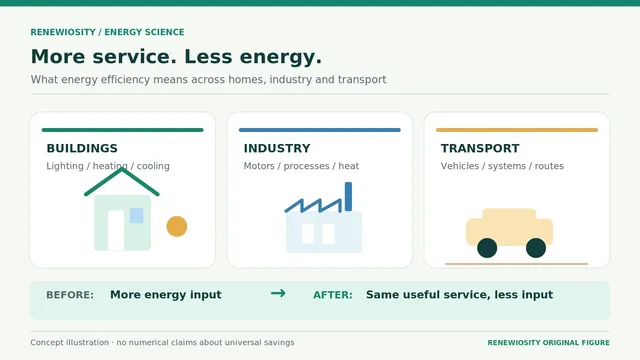
What Is Energy Efficiency? Why Using Less Energy Matters
An accessible introduction to energy efficiency, with equations and worked calculations for LED lighting, heat pumps and industrial motors.
Read article ↗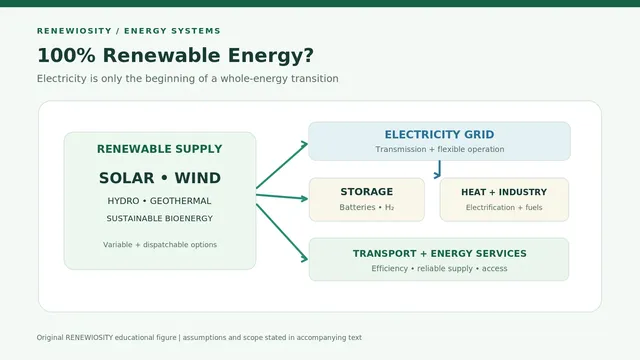
Can the World Run Entirely on Renewable Energy? Opportunities and Challenges
An evidence-based guide to 100% renewable electricity versus total energy, with 2026 data, grid challenges, storage calculations and hydrogen trade-offs.
Read article ↗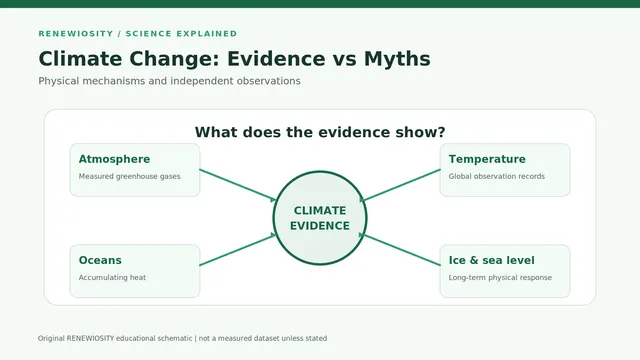
Climate Change Myths vs Scientific Facts: Common Questions Answered
Evidence-based answers to common climate change myths, with 2026 data, IPCC findings and worked greenhouse-gas calculations.
Read article ↗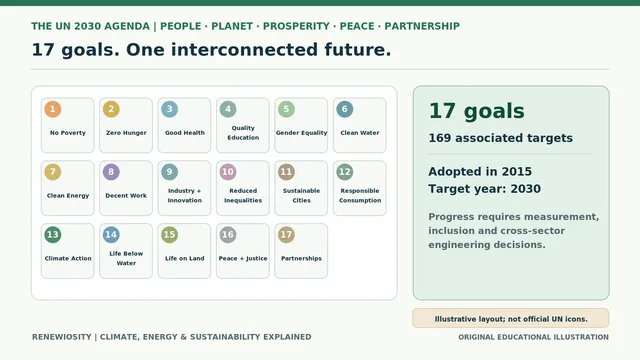
What Are the UN Sustainable Development Goals? Understanding the 17 SDGs
A rigorous introduction to all 17 UN SDGs and 169 targets, including the 2026 progress assessment and worked energy, water and emissions calculations.
Read article ↗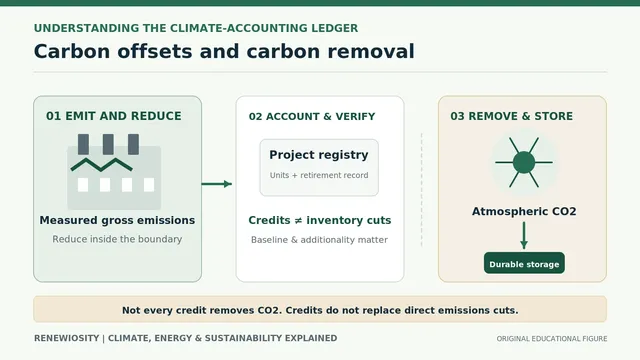
What Are Carbon Offsets and Carbon Removal? How They Work and Their Limitations
Carbon offsets, credits and carbon removal are not interchangeable. Learn additionality, baselines, permanence, carbon accounting, direct air capture and worked engineering examples.
Read article ↗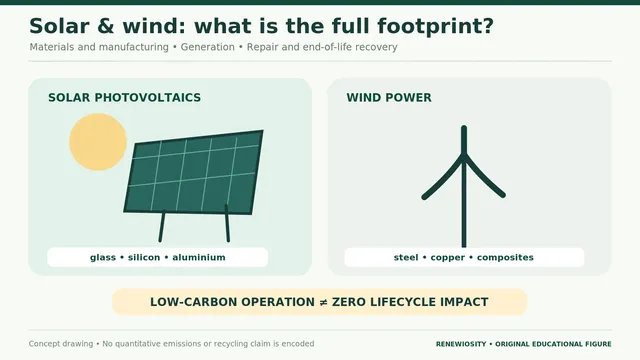
How Sustainable Are Solar Panels and Wind Turbines? Manufacturing, Materials and Recycling
Do solar panels and wind turbines remain sustainable after manufacturing and disposal? Understand materials, lifecycle emissions, recycling challenges and engineering calculations.
Read article ↗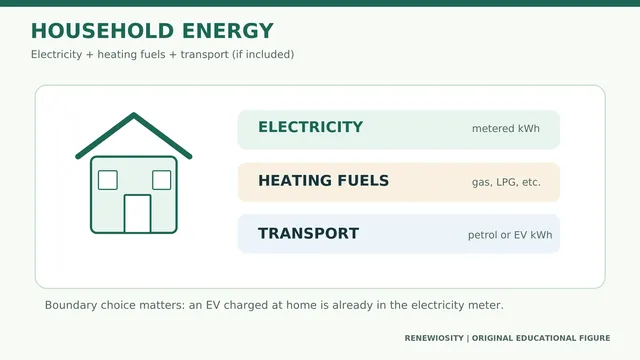
How Much Energy Does a Typical Household Consume? Electricity, Heating and Transport
How much energy does a household really use? Compare electricity, heating and transport with current UK and U.S. benchmarks, clear system boundaries and worked …
Read article ↗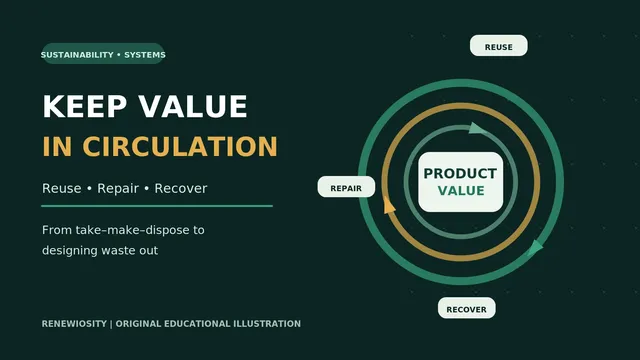
What Is the Circular Economy? How Reuse, Repair and Recycling Reduce Waste
Learn how a circular economy reduces waste through reuse, repair and recycling, with real material-flow reasoning, life-cycle tradeoffs and a worked calculation.
Read article ↗
Climate Change Mitigation vs Adaptation: What's the Difference?
A clear guide to climate mitigation and adaptation, from clean electricity to flood protection, with examples, a worked calculation and the latest UN evidence.
Read article ↗
How Do Forests and Oceans Absorb Carbon Dioxide? Understanding Natural Carbon Sinks
Discover how forests, soils and oceans absorb CO₂, why natural carbon sinks matter, and what the revised Global Carbon Budget says about their limits.
Read article ↗
What Is Sustainable Development? Meaning, Goals and Real-World Examples
Sustainable development improves lives today while protecting future opportunities. Learn the 17 UN goals, practical examples, trade-offs and an illustrative school-energy calculation.
Read article ↗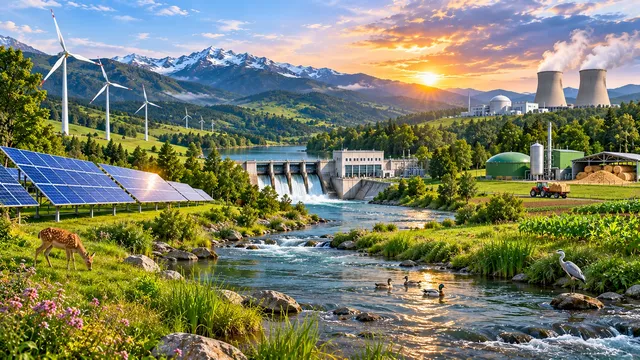
Renewable Energy vs Clean Energy vs Sustainable Energy: What’s the Difference?
Renewable describes a replenishing source, clean describes emissions or pollution, and sustainable evaluates wider long-term impacts. Compare solar, wind, hydro, biomass and nuclear using …
Read article ↗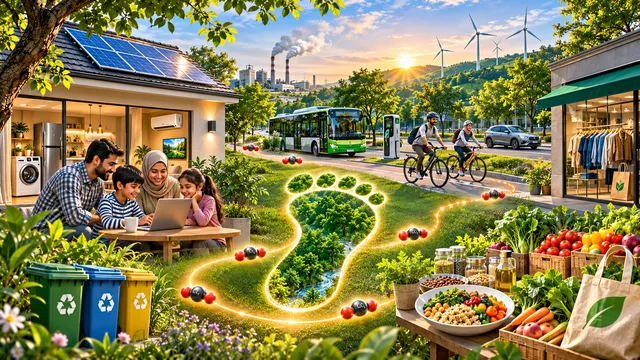
What Is a Carbon Footprint? Everyday Examples and Ways to Reduce It
A carbon footprint estimates the greenhouse gases linked to a person, household, activity or product. Learn how electricity, travel, food and purchases are counted …
Read article ↗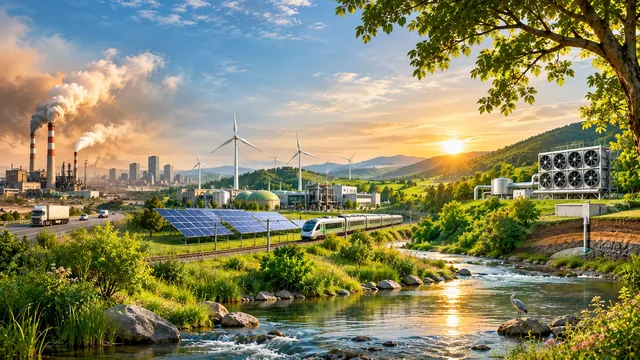
What Does Net Zero Mean? Carbon Neutrality and Net-Zero Emissions Explained
Net zero means balancing remaining human-caused emissions with genuine atmospheric removals after deep emissions reductions. Discover how net-zero CO₂ differs from net-zero greenhouse gases, …
Read article ↗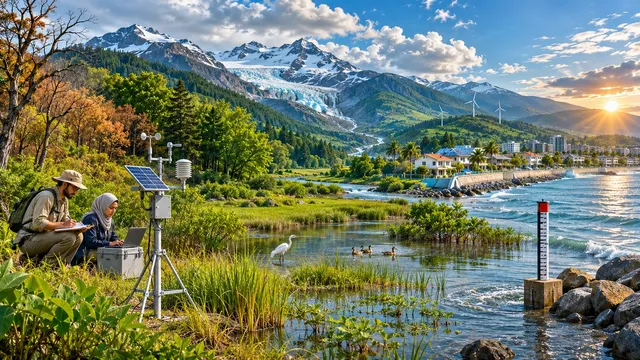
What Is Climate Change? Causes, Evidence and Consequences
What is climate change? Learn how the greenhouse effect, human emissions and natural variability shape Earth’s climate, and examine evidence from temperature, oceans, ice …
Read article ↗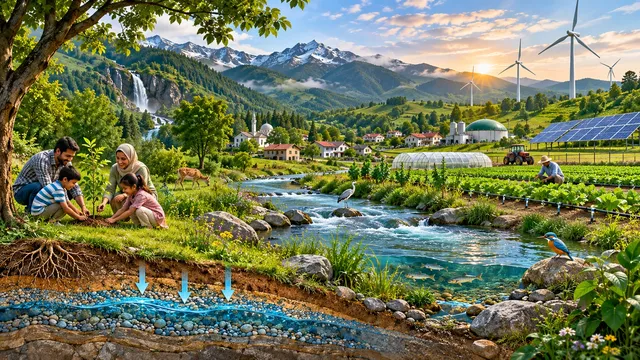
What Is Sustainability? Meaning, Simple Examples, and Why It Matters
Discover what sustainability really means, why it matters and how to recognize sustainable practices using simple examples from water, forests, farming and clean energy.
Read article ↗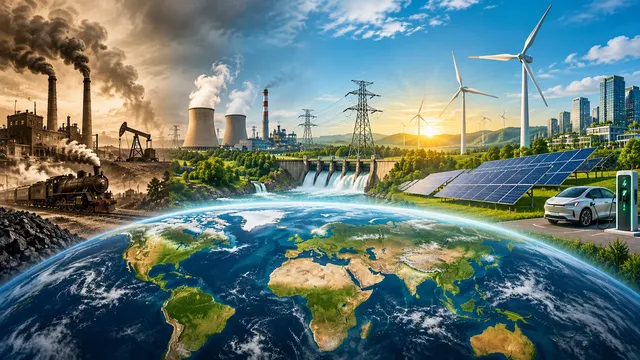
How Much of the World's Energy Comes from Clean Sources? Past, Present and Future (1900–2050)
Explore how the global clean-energy share changed from 1900 to 2025, why electricity differs from total energy, and what IEA scenarios suggest for 2050.
Read article ↗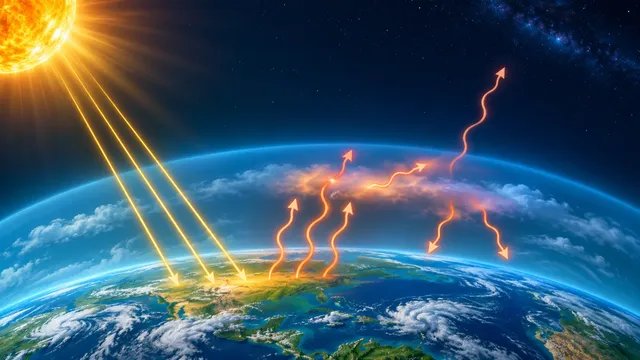
What Is the Greenhouse Effect? How Greenhouse Gases Warm the Earth
Understand how sunlight, infrared radiation and greenhouse gases keep Earth warm, and why added emissions strengthen the greenhouse effect.
Read article ↗