
RENEWABLE ENERGY / KNOWLEDGE HUB
Geothermal Energy
Geothermal Energy
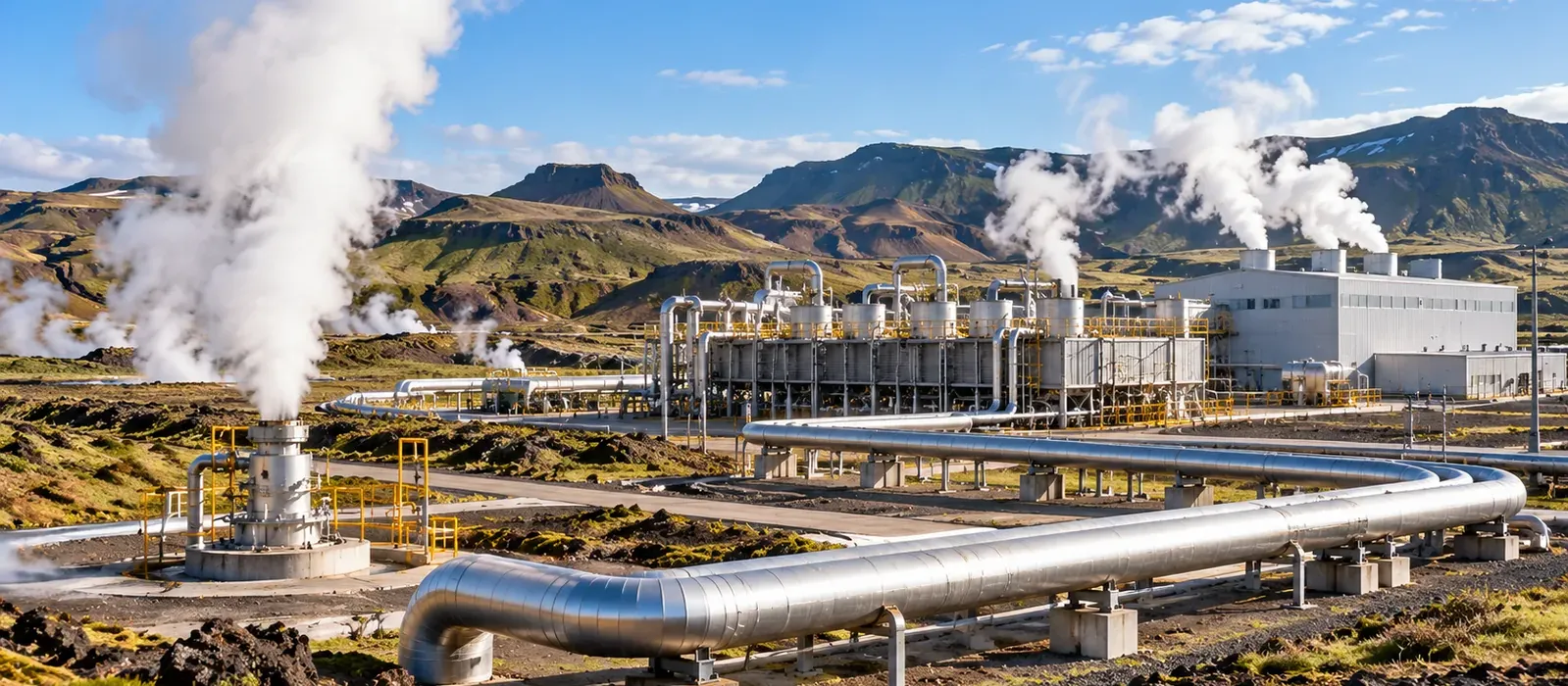
Geothermal energy is thermal energy stored within the Earth. It originates from the planet's internal heat, including heat retained from its formation and heat generated by radioactive decay. This energy can be used for electricity generation, district heating, industrial heat supply and building heating and cooling.
Geothermal systems offer an important alternative within the renewable energy portfolio because suitable resources can provide relatively steady energy output, rather than depending directly on daily sunlight or short-term wind conditions.
How Geothermal Energy Is Harnessed
The Earth's temperature generally increases with depth, although the geothermal gradient varies significantly by location. Where geological conditions permit, wells can access naturally heated fluids or engineered subsurface circulation systems.
Geothermal projects must account for reservoir temperature, pressure, permeability, fluid chemistry, well productivity and long-term resource management.
Types of Geothermal Power Plants
Dry steam power plants use steam from geothermal reservoirs to drive turbines directly.
Flash steam power plants reduce the pressure of high-temperature geothermal liquid, allowing part of it to vaporize into steam for electricity generation.
Binary-cycle power plants transfer heat from geothermal fluid to a separate working fluid with suitable thermodynamic properties. The secondary fluid drives a power cycle while remaining physically separated from the geothermal fluid.
Each configuration has distinct resource requirements, thermodynamic characteristics and operational constraints.
Geothermal Engineering and Thermodynamics
Geothermal power engineering involves fluid flow, heat transfer, turbine performance, thermodynamic cycles, pumping requirements and heat-exchanger design.
An important distinction is that geothermal heat extraction and electricity production are not equivalent. The useful electrical output depends on the available temperature difference, conversion technology and parasitic energy consumption.
Explore the Geothermal Learning Path
Start by understanding geothermal resources and the Earth's internal heat. Continue with geothermal power plant technologies and then examine energy balances, mass flow rates, thermal efficiencies and worked engineering calculations.
RENEWIOSITY combines physical explanations with practical quantitative analysis to support renewable energy education and informed technical decision-making.
ARTICLES & TECHNICAL GUIDES
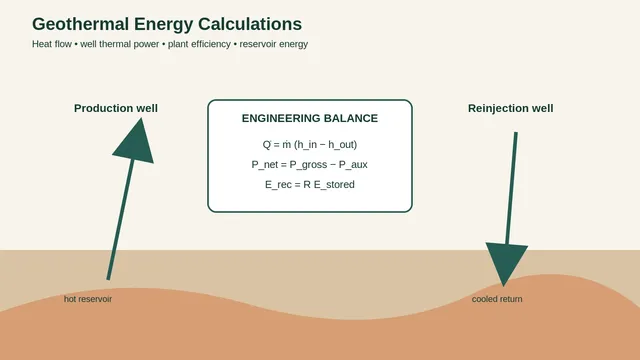
Geothermal Energy Calculations: Heat Flow, Efficiency, Power Output and Reservoir Energy
A university-level geothermal engineering calculation guide covering temperature gradients, conductive heat flow, well thermal power, flash steam, turbine output, binary cycles, parasitic loads, efficiency, …
Read article ↗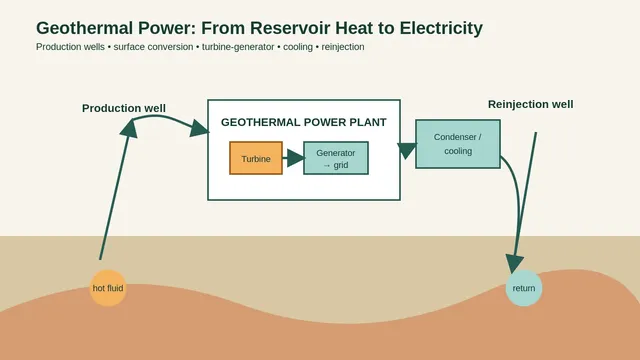
How Do Geothermal Power Plants Work? Dry Steam, Flash Steam and Binary Cycle Systems
A university-level guide to dry-steam, flash-steam and binary-cycle geothermal power plants, including separators, turbines, heat exchangers, condensers, reinjection, chemistry, efficiency and worked SI-unit calculations.
Read article ↗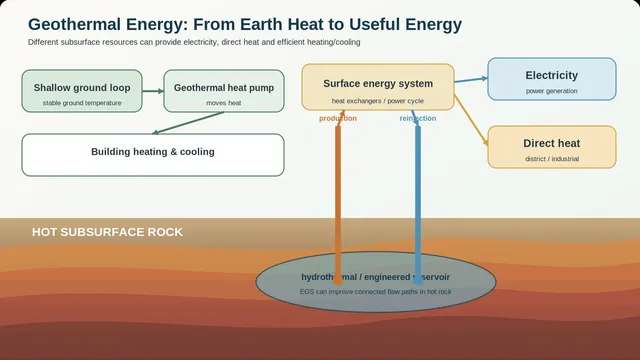
What Is Geothermal Energy? How Earth’s Heat Becomes Useful Power and Heating
A university-level introduction to geothermal energy, Earth heat, geothermal gradients, hydrothermal reservoirs, direct use, heat pumps, enhanced geothermal systems and introductory SI-unit calculations.
Read article ↗