
RENEWABLE ENERGY / KNOWLEDGE HUB
Hydropower
Hydropower
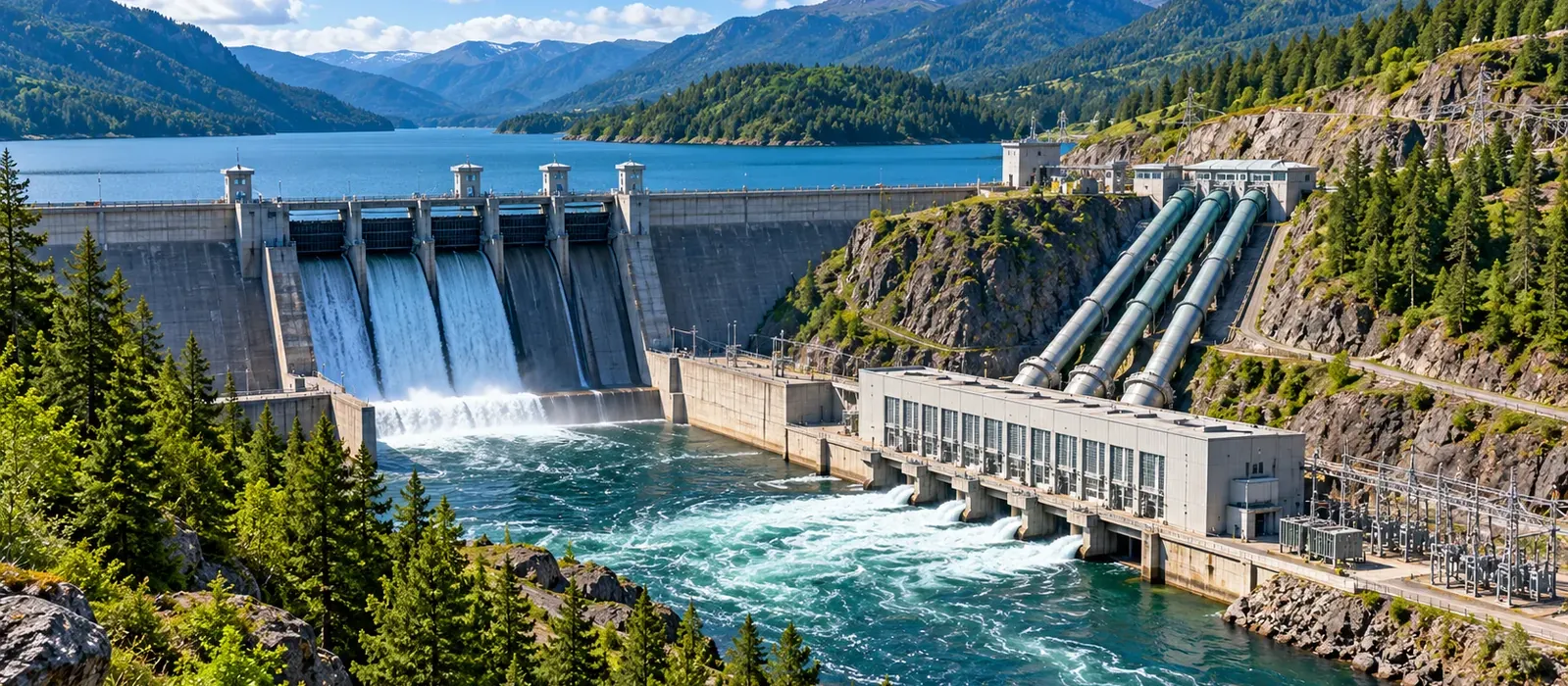
Hydropower converts the energy of moving or elevated water into useful mechanical power and electricity. It is one of the most established renewable electricity technologies and plays an important role in power systems through electricity generation, operational flexibility and, in some configurations, energy storage.
Hydroelectric systems range from large reservoir-based stations to run-of-river installations and smaller distributed power projects. Their design depends on the available water flow, hydraulic head, environmental constraints and electricity-system requirements.
How Hydroelectric Power Is Generated
Water at a higher elevation possesses gravitational potential energy. When it flows through a hydraulic turbine, part of that energy is converted into shaft power. A connected generator then converts mechanical power into electricity.
The amount of power available depends primarily on water density, gravitational acceleration, volumetric flow rate, net hydraulic head and overall conversion efficiency.
Types of Hydropower Systems
Reservoir hydropower uses stored water to manage electricity generation according to operational requirements and water availability.
Run-of-river hydropower relies primarily on river flow, generally with less storage than conventional reservoir-based systems.
Pumped-storage hydropower moves water to an upper reservoir using electricity and releases it later to recover part of that energy. It is an energy-storage technology rather than a net source of energy.
Hydraulic Turbines and Plant Components
Hydropower facilities may use Francis, Kaplan, Pelton or other turbine configurations depending on hydraulic head, flow rate and operating conditions.
Engineers must also consider penstocks, intake structures, hydraulic losses, cavitation, generators, control systems, sediment management and downstream environmental impacts.
Engineering Calculations and Performance
Hydropower analysis applies fluid mechanics, energy conservation, hydraulic machinery principles and electrical conversion efficiency.
Calculations of net head, flow rate, turbine efficiency, power output, annual electricity generation and capacity factor help engineers evaluate system performance and practical feasibility.
Explore the Hydropower Learning Path
Begin with the physical principles of hydropower, progress to the operation of hydroelectric power plants, and then examine practical engineering calculations and worked numerical examples.
RENEWIOSITY provides accessible explanations alongside the quantitative methods required for advanced renewable energy study.
ARTICLES & TECHNICAL GUIDES
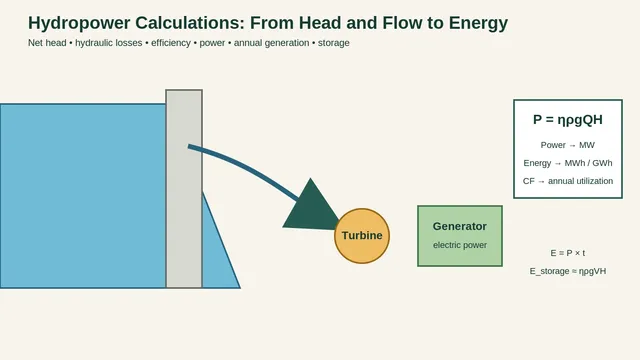
Hydropower Calculations: Head, Flow Rate, Efficiency, Power Output and Energy Generation
A university-level hydropower calculation guide covering gross and net head, penstock velocity and losses, hydraulic and electrical power, efficiency chains, annual energy, capacity factor, …
Read article ↗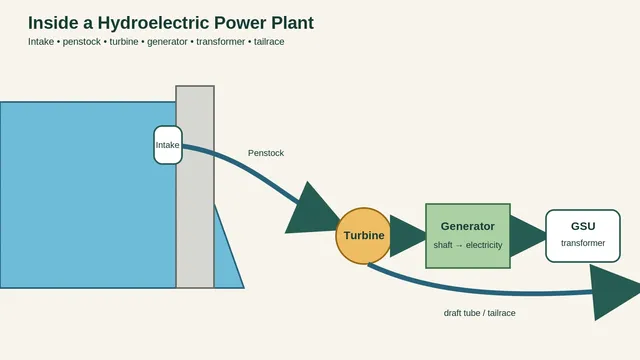
How Do Hydroelectric Power Plants Work? Turbines, Dams, Penstocks and Generators
A university-level guide to hydroelectric power-plant engineering, covering intakes, penstocks, hydraulic losses, water hammer, Pelton, Francis and Kaplan turbines, draft tubes, cavitation, generators, governors, …
Read article ↗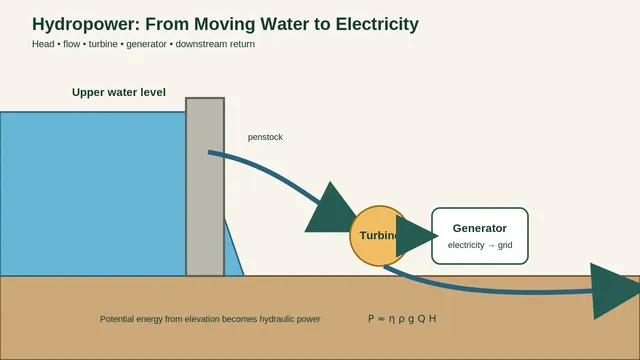
What Is Hydropower? How Moving Water Becomes Electricity
A university-level introduction to hydropower covering hydraulic head, water flow, turbines, generators, impoundment and run-of-river systems, pumped storage, efficiency, annual energy and environmental considerations.
Read article ↗