
RENEWABLE ENERGY / KNOWLEDGE HUB
Energy Storage & Batteries
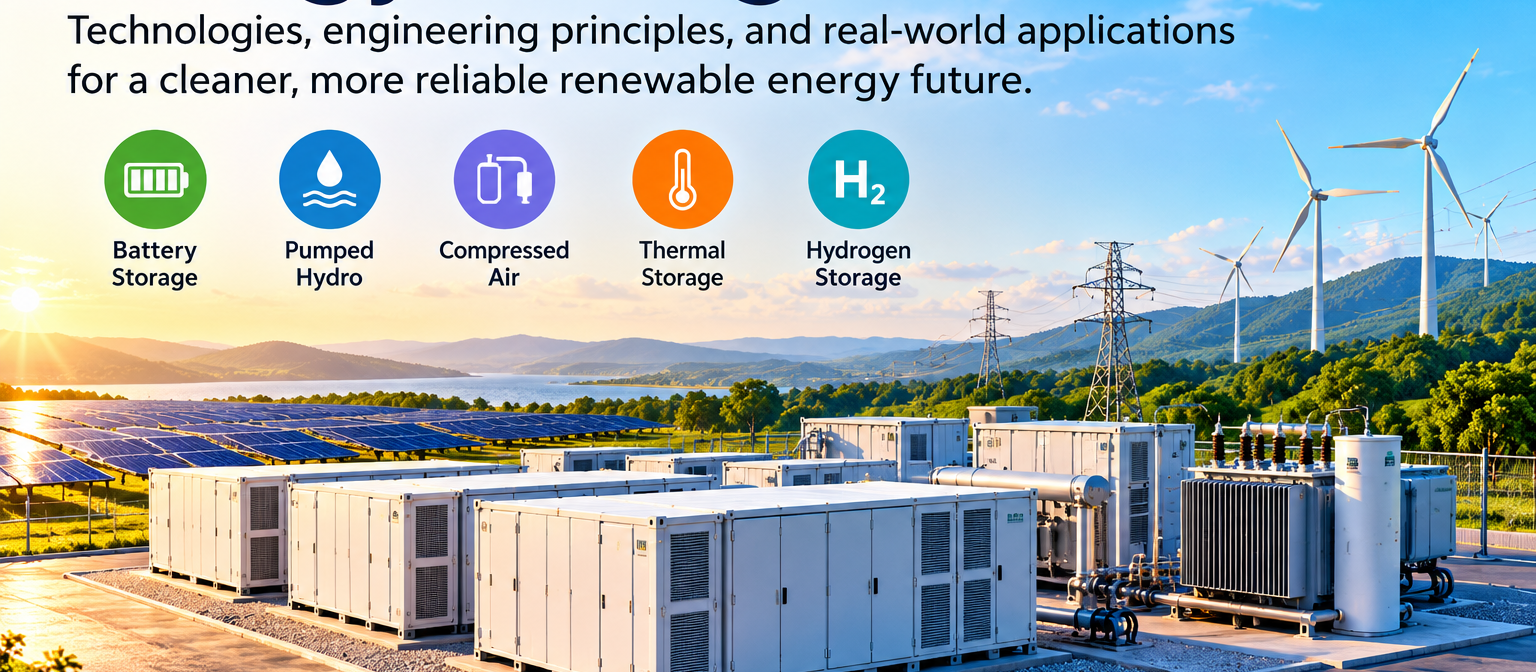
Energy storage is essential to building a reliable, efficient, and sustainable energy future. As electricity generation from solar and wind power continues to grow, energy storage technologies help balance electricity supply and demand, manage fluctuations in renewable generation, and improve the flexibility and resilience of modern power systems.
Energy Storage & Batteries is RENEWIOSITY's educational resource hub for understanding how energy can be stored, converted, managed, and delivered when needed. Explore the scientific principles, engineering design methods, technologies, and real-world applications of modern energy storage systems.
Our comprehensive guides cover lithium-ion batteries, battery energy storage systems (BESS), pumped hydroelectric storage, compressed-air energy storage, thermal energy storage, hydrogen storage, and emerging storage technologies.
For engineering students and technical readers, we provide detailed explanations of electrochemical and thermodynamic principles, energy and power calculations, storage capacity sizing, round-trip efficiency, charge and discharge characteristics, battery degradation, thermal management, and system performance.
Each technical lesson emphasizes clear explanations, engineering equations, worked numerical examples, scientific illustrations, and practical applications.
Whether you are studying renewable energy engineering, researching storage technologies, designing energy systems, or simply exploring how renewable electricity can be stored for later use, this learning hub offers a structured pathway from fundamental concepts to advanced engineering analysis.
ARTICLES & TECHNICAL GUIDES
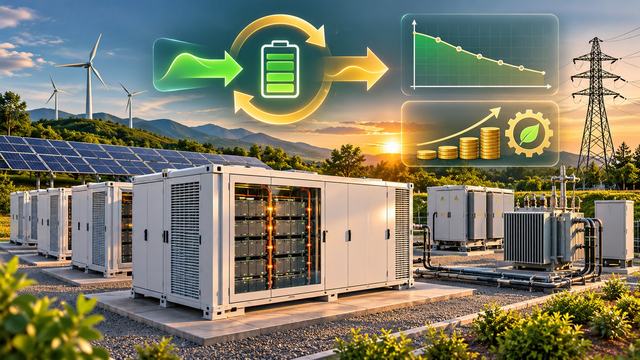
Battery Storage Calculations: Round-Trip Efficiency, Degradation and Lifecycle Cost
Calculate battery round-trip efficiency, capacity fade, energy throughput and discounted levelized cost of storage with engineering examples and original charts.
Read article ↗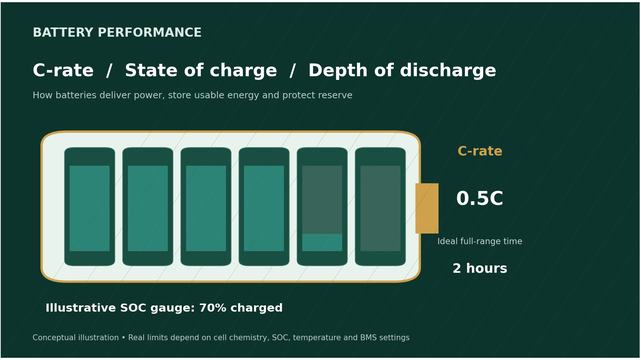
Battery C-Rate, State of Charge and Depth of Discharge Explained
Understand C-rate, battery state of charge and depth of discharge with practical sizing examples, SOC-window diagrams, degradation, and safe BESS operating limits.
Read article ↗
Battery Energy Storage System Design: Components, Architecture and Sizing
Learn to design battery energy storage systems from cell and rack architecture through BMS, PCS, EMS, power ratings, end-of-life capacity, discharge duration and safety, …
Read article ↗
Lithium-Ion Batteries Explained: Electrochemistry, Cell Chemistry, Charging, Degradation, and Safety
A university-level guide to lithium-ion cell electrochemistry, charge transfer, theoretical capacity, LFP/NMC chemistry, CC–CV charging, heat generation, aging and thermal-runaway safety, with equations and …
Read article ↗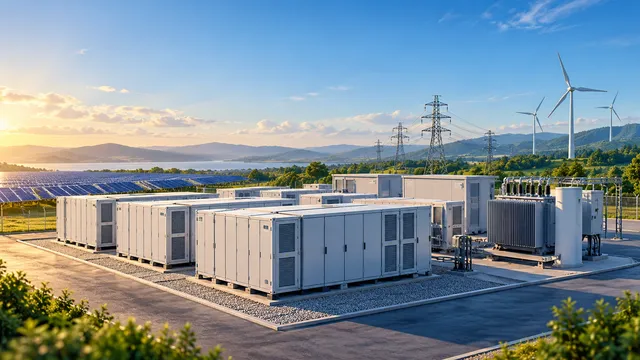
Battery Energy Storage Systems (BESS): How They Work, Components, Sizing Calculations, Efficiency, and Applications
A university-level engineering guide to BESS architecture, electrochemistry, AC/DC power conversion, SOC and C-rate, end-of-life sizing, dispatch equations, thermal management, safety and costs.
Read article ↗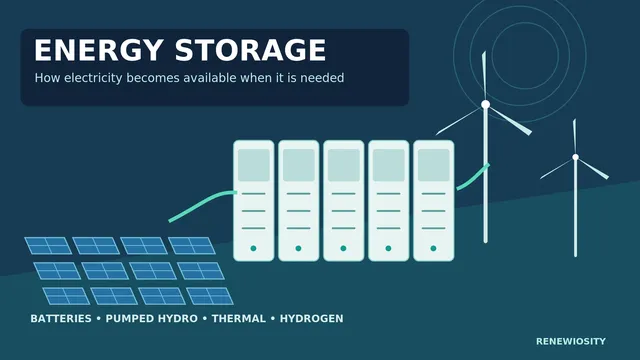
What Is Energy Storage? Technologies, Working Principles, Applications, and the Future of Renewable Power
An engineering introduction to energy storage, including battery systems, pumped hydro, thermal and hydrogen storage, power-versus-energy sizing, round-trip efficiency, grid services, and worked SI-unit …
Read article ↗