
RENEWABLE ENERGY / KNOWLEDGE HUB
Bioenergy & Biomass
Bioenergy & Biomass
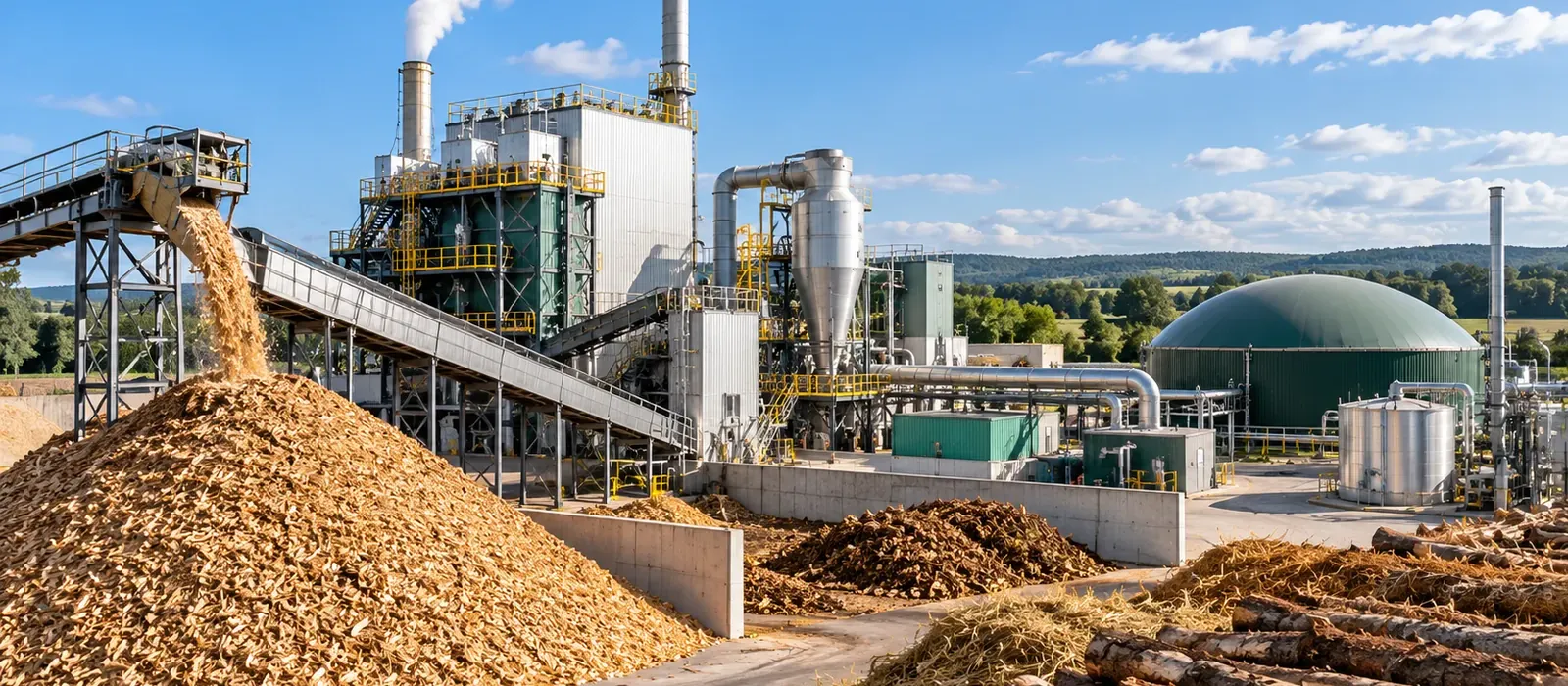
Bioenergy is renewable energy derived from biological materials such as wood, agricultural residues, forestry by-products, organic municipal waste and other forms of biomass. These materials contain chemical energy originally captured through biological processes, principally photosynthesis. Through carefully selected conversion technologies, that stored energy can be transformed into useful heat, electricity, gaseous fuels and liquid fuels.
Biomass is particularly interesting from an engineering perspective because it connects renewable energy with thermodynamics, chemical reaction engineering, heat transfer, fluid mechanics, biological processes and environmental management.
Understanding Biomass Energy
Unlike solar and wind energy, which depend on continuously varying natural resources, many forms of biomass can be stored and converted when energy is required. However, biomass properties vary substantially with feedstock type, moisture content, ash composition, elemental composition and heating value.
These characteristics determine which conversion pathway is technically suitable and economically practical.
Major Biomass Conversion Technologies
Combustion converts the chemical energy of biomass directly into heat through oxidation. This heat can supply industrial processes or produce steam for electricity generation.
Gasification converts carbonaceous materials into a combustible gas mixture containing species such as carbon monoxide, hydrogen and methane. The resulting gas can be used for heat, power generation or further chemical processing after suitable cleanup.
Pyrolysis heats biomass in the absence of oxygen, producing different proportions of bio-oil, permanent gases and solid char depending on operating conditions.
Anaerobic digestion uses microorganisms to decompose biodegradable organic matter without oxygen, producing methane-rich biogas and digestate.
Engineering Analysis of Bioenergy Systems
The performance of a biomass conversion system depends on more than its energy output. Engineers must evaluate mass and energy balances, moisture removal, fuel heating values, thermal efficiency, emissions, equipment selection and overall resource utilization.
For chemical engineering students, bioenergy provides practical applications of conservation laws, reaction stoichiometry, process integration and thermodynamic efficiency.
Explore the Bioenergy Learning Path
Begin with the fundamentals of biomass energy, continue with the major conversion processes, and then study engineering calculations involving heating values, mass balances, energy balances and conversion efficiencies.
RENEWIOSITY presents these subjects through technical explanations, diagrams, worked examples and references designed to support both independent learning and university-level study.
ARTICLES & TECHNICAL GUIDES
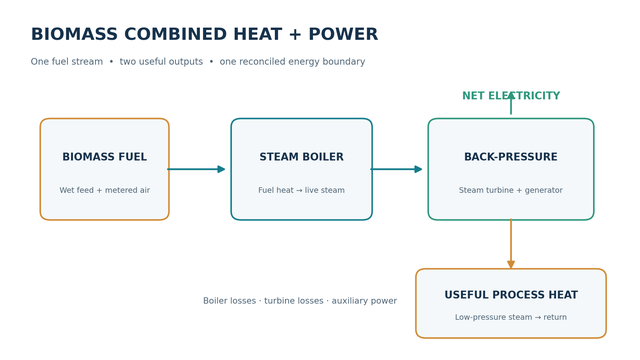
Biomass Combined Heat and Power: Mass Balances, Energy Balances and Efficiency
Learn biomass combined heat and power engineering with fuel and air mass balances, steam turbine energy balances, net electricity, useful heat and CHP efficiency …
Read article ↗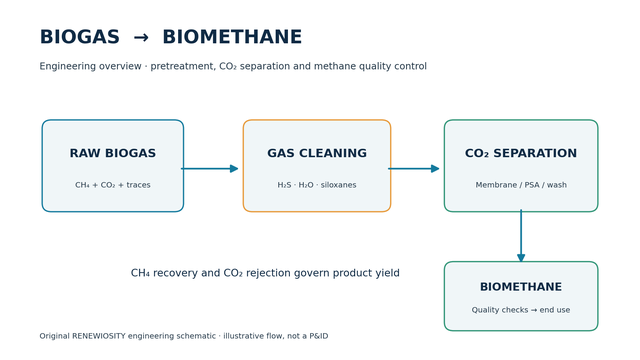
Biogas Upgrading to Biomethane: CO₂ Removal, Purification and Process Design
Understand biomethane upgrading and CO₂ removal with water washing, amine scrubbing, PSA and membranes; complete methane recovery, material-balance and process-design calculations.
Read article ↗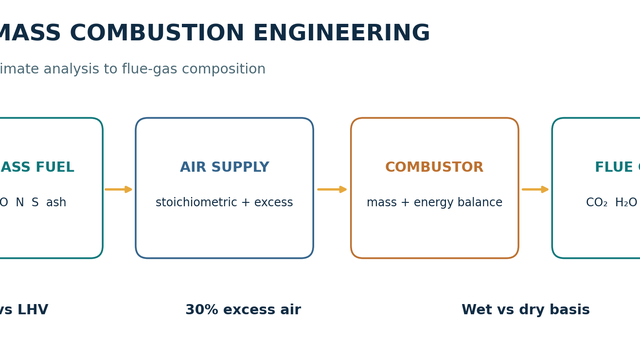
Biomass Combustion Engineering: Heating Value, Excess Air and Flue Gas Analysis
Learn biomass fuel ultimate analysis, HHV versus LHV, stoichiometric oxygen, excess air and wet/dry flue-gas calculations through a reproducible engineering example.
Read article ↗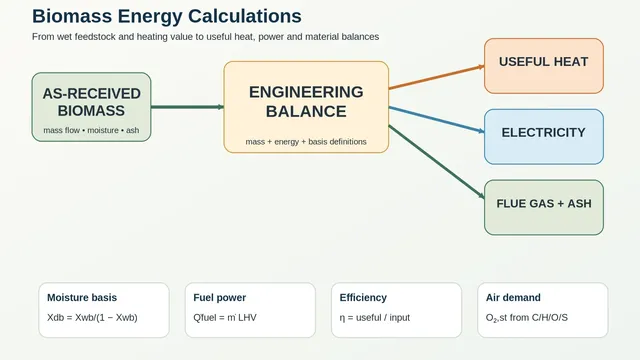
Biomass Energy Calculations: Heating Value, Moisture, Efficiency, Mass Balances and Fuel Requirements
A calculation-focused engineering guide to biomass moisture bases, heating values, fuel requirements, combustion air, mass balances, conversion efficiencies and worked SI-unit problems.
Read article ↗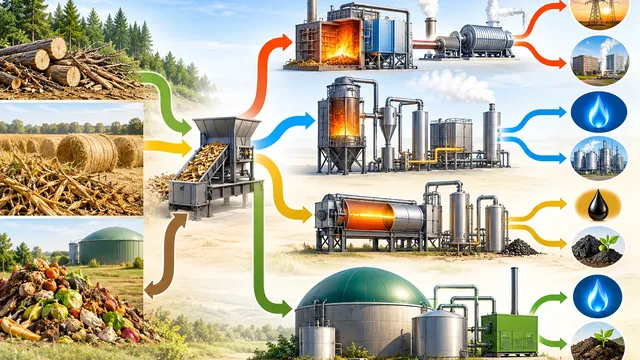
How Is Biomass Converted into Energy? Combustion, Gasification, Pyrolysis and Anaerobic Digestion
A university-level guide to biomass conversion technologies, feedstock preparation, combustion, gasification, pyrolysis, anaerobic digestion, process efficiency, cleanup, mass and energy balances, route selection and …
Read article ↗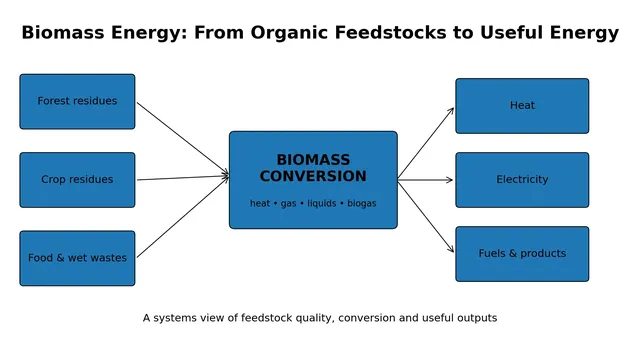
What Is Biomass Energy? How Organic Matter Becomes Useful Energy
A university-level introduction to biomass energy: feedstocks, photosynthetic energy storage, moisture and heating value, combustion, gasification, pyrolysis, anaerobic digestion, energy balances, sustainability, and worked …
Read article ↗